The Solopreneur Revolution Takes America by Storm
Starting one's own business has long been a part of the American tapestry of dreams. But more than ever, becoming an owner doesn't involve managing a massive payroll or activity-filled warehouse. In fact, it doesn't require anyone other than yourself.

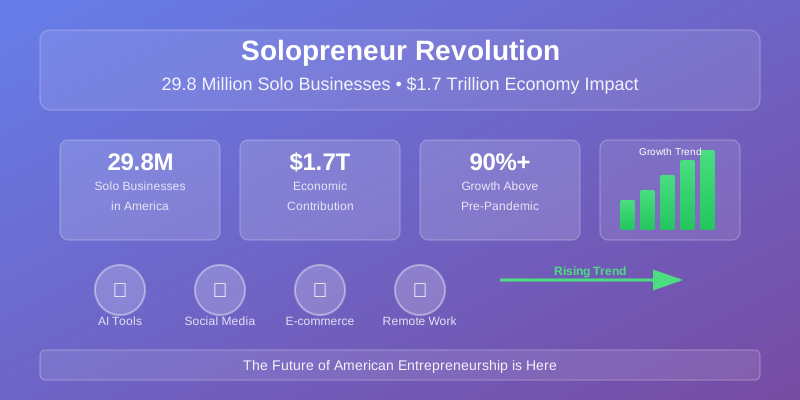
The nation's 29.8 million solopreneurs — businesses with no paid employees — contribute $1.7 trillion to the U.S. economy, representing 6.8% of total economic activity, according to the most recently published U.S. Census Bureau data. California led the way with 3,502,950 solo businesses in 2022, but Florida was tops in per capita solo start-ups, with about 13.3 non-employer establishments per 100 people.
Business Applications Surge 90% Above Pre-Pandemic Levels
More recent data sources also point to the "solopreneurship" business model growing at a torrid pace. Entrepreneurs are filing an average of over 440,000 applications every month – a rate over 90% faster than pre-pandemic averages, according to the Small Business Administration.
While side hustles have been a staple of the American economy for years, it may seem counterintuitive that amid tariffs and high interest rates, the ranks of small business owners are growing. But one-person businesses are growing faster than ever, and experts agree that artificial intelligence is likely a factor.
AI Technology: The Great Equalizer
• Barriers to Entry Disappear
"I think the barriers to entry for being a small business owner now are probably the least they've ever been," said Mark Valentino, Los Angeles-based head of business banking for Citizens Bank. He estimates that an interested individual could start a side hustle in 10 minutes and start making money, with AI providing a ready-made virtual assistant and ChatGPT available to assemble a business plan within minutes.

"And that business plan would probably be solid enough for a first draft to go to a bank or a banker or an SBA lender and say, 'Hey, you know, I got a business plan and I have a little bit of money and I want to start this venture and how can you help me?' We're definitely seeing that trend," Valentino said.
• Essential AI Tools for Solopreneurs
- ChatGPT & Claude: Business planning, content creation, customer service
- Jasper AI: Marketing copy and social media content
- Canva AI: Professional design and branding materials
- QuickBooks AI: Automated bookkeeping and financial management
- Calendly: Automated scheduling and client management
Social Media: The New Marketplace
Millions of TikTok Businesses Drive Growth
Social media is also powering these numbers as solopreneurs are connecting with interested consumers online instantly, customer bases that once would have taken years to identify and build.

Esme Lean, head of small business at TikTok, points to a creator who recently moved 750 bottles of monk fruit chamoy (probably not the first – or second – item on most people's shopping lists) in her first week online. She developed the traditional Mexican topping with monk fruit instead of sugar to cater to some dietary restrictions.
"You don't even have to have a business idea; it could just be something interesting or something you love that you end up creating a business from," Lean said.
There are an estimated 7.5 million businesses on TikTok, and after being banned by a Congressional law that was later upheld by the Supreme Court, the social media platform now seems on the verge of being permanently saved by a deal between the Trump administration and China.
Female Entrepreneurs Under 30 Lead the Charge
Many TikTok businesses are soloists with shops selling obscure items, Lean said. The most significant growth is among female entrepreneurs under 30, tapping into what she described as a craving for authenticity that is relatively inexpensive to build a business around.

In previous generations, reaching a profitable audience would have required an advertising campaign that was out of budget for most.
"These stories reflect a much larger wave of entrepreneurs who are growing not by spending heavily on traditional marketing, but by relying on creativity and community," Lean said.
• Social Media Platform Breakdown
- TikTok: 7.5 million businesses, viral product discovery
- Instagram: Visual storytelling, influencer partnerships
- YouTube: Long-form content, educational marketing
- LinkedIn: B2B networking, professional services
- Facebook: Community building, local market reach
The Creator Economy Revolution
Digital Creators Become Business Owners
The creator economy is a vital driver of the solopreneur boom, according to Saurav Pathak, clinical associate professor at the Raymond A. Mason School of Business at William & Mary. "It has become extremely easy to build personal brands and get paid directly by passionate fans via platforms like YouTube, TikTok, and Patreon," Pathak said.

But he added that this is only part of a bigger trend, as consumers find themselves increasingly disconnected from sprawling corporations. "They prefer authentic, niche, or personal brands to large corporations for the personal touch and hands-on connection with founders that one-person companies can provide," he said.
Revenue Streams in the Creator Economy
• Direct Monetization Methods
- Subscription platforms: Patreon, OnlyFans, Substack
- Course sales: Teachable, Udemy, Gumroad
- Digital products: Templates, presets, e-books
- Consulting services: One-on-one coaching, strategy sessions
• Indirect Revenue Opportunities
- Affiliate marketing: Commission-based product recommendations
- Sponsored content: Brand partnerships and collaborations
- Merchandise sales: Print-on-demand products
- Speaking engagements: Virtual and in-person events
Leaving Traditional Corporate Career Paths Behind
The Great Resignation Meets Entrepreneurship
Whether AI or social media, Najiba Benabess, the business dean at Neumann University, says the rise of the solopreneurs reflects a significant shift in use of technology and how workers across the economy view professional opportunities.

"Technology has lowered barriers to entry; one person with a laptop can now run a global business," Benabess said, noting that at the same time, people are prioritizing flexibility, autonomy, and purpose over traditional career paths.
"Solopreneurship also responds to rapid changes in the labor market, where skills and creativity are more valuable than organizational structures."
Why People Choose Solopreneurship
• Personal Freedom Factors
- Flexible schedules: Work when and where you want
- Creative control: Full ownership of business decisions
- Income potential: Unlimited earning capacity
- Work-life balance: Better integration of personal and professional life
• Economic Motivations
- Job security concerns: Corporate layoffs and instability
- Inflation protection: Multiple income streams
- Skill monetization: Direct value from expertise
- Retirement planning: Building assets vs. relying on employers
Success Strategies for Aspiring Solopreneurs
Key Success Factors for Aspiring Solopreneurs
For those looking to join the solopreneur revolution, several key factors contribute to success:

Technology Adoption Mastery
• Essential Digital Tools
- AI Tool Integration: Leverage ChatGPT, Jasper, and other AI tools for efficiency
- Process Automation: Reduce repetitive tasks to focus on core business
- Digital Marketing Mastery: Master social media and online marketing skills
- Cloud Infrastructure: Use Google Workspace, Dropbox, and project management tools
Strategic Market Positioning
• Brand Development Essentials
- Niche Market Focus: Identify and serve specific target customer segments
- Personal Brand Building: Develop authentic and trustworthy personal image
- Community Building: Cultivate loyal customer relationships
- Content Strategy: Consistent, valuable content across platforms
Financial Management Excellence
• Revenue and Risk Management
- Diversified Revenue Streams: Reduce risk from single income sources
- Cost Control: Maintain lean operational expenses
- Cash Flow Management: Ensure sustainable business operations
- Tax Planning: Understand self-employment tax implications
Industry Sectors Leading the Boom
High-Growth Solopreneur Industries
• Digital Services Sector
- Web development and design: Custom websites, e-commerce solutions
- Digital marketing: SEO, social media management, content creation
- Online education: Course creation, tutoring, skill training
- Virtual assistance: Administrative support, project management
• Creative and Content Industries
- Graphic design: Branding, marketing materials, digital art
- Writing and copywriting: Blog content, marketing copy, ghostwriting
- Photography and videography: Event coverage, stock content, tutorials
- Podcasting and video creation: Educational content, entertainment
• Consulting and Professional Services
- Business consulting: Strategy, operations, specialized expertise
- Health and wellness coaching: Fitness, nutrition, mental health
- Financial services: Tax preparation, bookkeeping, financial planning
- Legal services: Contract review, compliance, specialized law areas
The Future of Work is Here
Trends Shaping the Solopreneur Economy
The rise of solopreneurship represents a fundamental shift in how work gets done. As technology continues to lower barriers and create new opportunities, this trend is expected to accelerate.

• Emerging Opportunities
- AI-powered services: Custom AI solutions for businesses
- Sustainability consulting: Green business practices, carbon footprint reduction
- Remote work facilitation: Virtual team building, digital collaboration
- Personalized health services: Genetic-based nutrition, precision wellness
• Technology Enablers
- 5G connectivity: Faster, more reliable internet everywhere
- Blockchain technology: Decentralized payments, smart contracts
- Virtual and augmented reality: Immersive service delivery
- Internet of Things: Connected device management and optimization
Success Principles for the New Economy
For aspiring entrepreneurs, the timing has never been better: tools are more powerful, opportunities are more abundant, and market conditions are increasingly favorable.
• Core Success Principles
- Embrace technology: Stay current with digital tools and platforms
- Build sustainable systems: Create processes that scale without you
- Focus on value delivery: Always prioritize genuine customer value
- Maintain adaptability: Be ready to pivot as markets change
Success lies in embracing technology, building sustainable systems, and always focusing on delivering genuine value to customers. As the one-person economy continues to evolve, those who adapt quickly and think strategically will find themselves at the forefront of this entrepreneurial revolution.
The Bottom Line
The solopreneur movement isn't just a trend—it's a fundamental restructuring of the American economy. With 29.8 million solo businesses contributing $1.7 trillion annually, this represents the largest entrepreneurial wave in U.S. history.
The combination of AI technology, social media platforms, and changing work preferences has created unprecedented opportunities for individual entrepreneurs. Whether you're looking to escape corporate constraints, build multiple income streams, or turn a passion into profit, the solopreneur path offers a viable route to financial independence and personal fulfillment.
The future belongs to those who can harness technology, build authentic relationships, and deliver real value in an increasingly digital world. The solopreneur revolution is here—and it's reshaping the American Dream for a new generation of entrepreneurs.