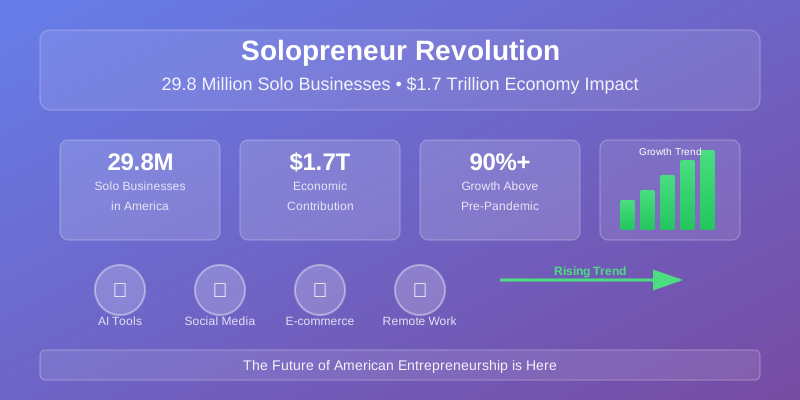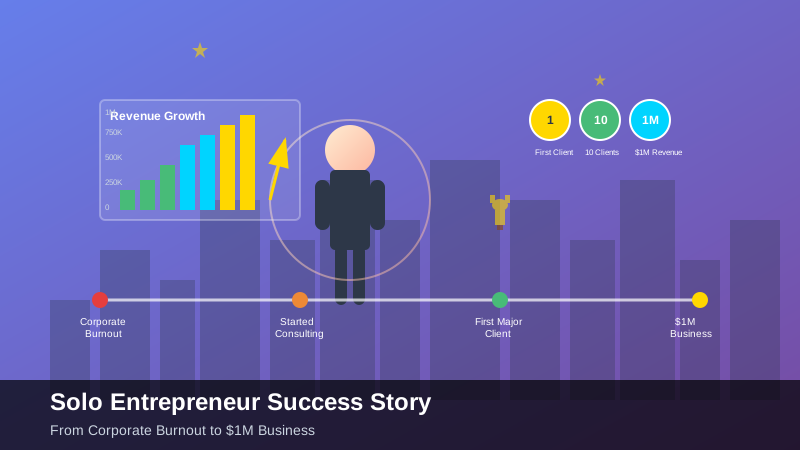
The digital nomad lifestyle has evolved from a niche trend to a mainstream career choice, with over 4.8 million people worldwide now identifying as digital nomads. This comprehensive guide explores seven proven business models that enable entrepreneurs to build sustainable, location-independent income streams while maintaining the freedom to work from anywhere in the world.
Understanding the Digital Nomad Economy
Market Overview and Growth Trends
The digital nomad economy has experienced explosive growth, particularly accelerated by the global shift toward remote work:
- The digital nomad population has grown by 131% since 2019
- 87% of digital nomads earn $50,000+ annually, with 44% earning over $100,000
- Remote work opportunities have increased by 159% across all industries
- 68% of companies now offer fully remote positions
- The average digital nomad saves 32% more money compared to traditional office workers
7 Proven Digital Nomad Business Models
1. Freelance Services & Consulting
Overview: Leveraging existing skills to provide services to clients worldwide.
Key Advantages:
- Low startup costs
- Immediate income potential
- Scalable hourly rates
- Global client base
- Web development and design
- Digital marketing and SEO
- Content writing and copywriting
- Graphic design and branding
- Business consulting
- Virtual assistance
Success Tips:
- Build a strong portfolio before traveling
- Establish reliable communication systems
- Consider time zone differences when pricing
- Maintain consistent quality across different locations
2. Online Course Creation & Education
Overview: Creating and selling educational content based on your expertise.
Revenue Streams:
- One-time course sales
- Subscription-based learning platforms
- Live coaching and workshops
- Certification programs
- Teachable, Thinkific, or Kajabi for course hosting
- Udemy for marketplace exposure
- YouTube for free content and lead generation
- Zoom for live sessions
Success Strategies:
- Validate your course idea before creation
- Create comprehensive, actionable content
- Build an email list for marketing
- Offer multiple price points and packages
3. E-commerce & Dropshipping
Overview: Selling physical products online without holding inventory.
Business Models:
- Traditional dropshipping
- Print-on-demand products
- Private label products
- Digital product sales
- Shopify for store creation
- Amazon FBA for fulfillment
- Etsy for handmade/unique items
- Social media for direct sales
Critical Success Factors:
- Product research and validation
- Reliable supplier relationships
- Strong brand and marketing
- Customer service excellence
4. Content Creation & Monetization
Overview: Building an audience through valuable content and monetizing through various channels.
Content Formats:
- Blog posts and articles
- YouTube videos
- Podcasts
- Social media content
- Email newsletters
- Affiliate marketing
- Sponsored content
- Product placements
- Membership sites
- Merchandise sales
Growth Strategies:
- Consistent content publishing schedule
- Engage actively with your audience
- Collaborate with other creators
- Diversify across multiple platforms
5. Software as a Service (SaaS)
Overview: Developing and selling software solutions that solve specific problems.
Popular SaaS Categories:
- Productivity tools
- Marketing automation
- Project management
- Analytics and reporting
- Communication platforms
- No-code/low-code platforms
- Custom development
- White-label solutions
- API integrations
Key Considerations:
- Validate market demand early
- Focus on solving real problems
- Plan for ongoing maintenance
- Build scalable infrastructure
6. Digital Marketing Agency
Overview: Providing marketing services to businesses while managing operations remotely.
Service Offerings:
- Social media management
- Pay-per-click advertising
- Search engine optimization
- Email marketing campaigns
- Content marketing strategy
- Networking and referrals
- Content marketing
- Cold outreach
- Partnership programs
Scaling Strategies:
- Hire virtual team members
- Develop standardized processes
- Use automation tools
- Focus on high-value clients
7. Investment & Trading
Overview: Generating income through various investment strategies and financial markets.
Investment Types:
- Stock market trading
- Cryptocurrency
- Real estate crowdfunding
- Peer-to-peer lending
- Foreign exchange (Forex)
Risk Management:
- Never invest more than you can afford to lose
- Diversify across different asset classes
- Continuous education and market research
- Use proper risk management tools
Essential Tools for Digital Nomad Success
Communication & Collaboration
- Slack or Microsoft Teams for team communication
- Zoom or Google Meet for video calls
- Asana or Trello for project management
- Google Workspace for document collaboration
Financial Management
- Wise (formerly TransferWise) for international transfers
- QuickBooks or FreshBooks for accounting
- PayPal or Stripe for payment processing
- Revolut or Charles Schwab for banking
Productivity & Organization
- Notion or Obsidian for note-taking
- RescueTime for time tracking
- LastPass or 1Password for security
- VPN services for secure internet access
Building Your Digital Nomad Business: Step-by-Step Guide
Phase 1: Preparation (Months 1-3)
1. Skill Assessment: Identify your marketable skills
- Market Research: Validate demand for your services
- Financial Planning: Build 6-12 months of expenses as buffer
- Legal Setup: Establish business entity and tax strategy
Phase 2: Launch (Months 4-6)
1. MVP Development: Create minimum viable product/service
- Client Acquisition: Secure first paying customers
- Systems Setup: Implement tools and processes
- Location Testing: Start with nomad-friendly destinations
Phase 3: Scale (Months 7-12)
1. Revenue Optimization: Increase rates and efficiency
- Team Building: Hire virtual assistants or contractors
- Process Automation: Streamline repetitive tasks
- Market Expansion: Explore new revenue streams
Common Challenges and Solutions
Time Zone Management
Challenge: Coordinating with clients across different time zones
Solution: Use scheduling tools like Calendly, set clear availability hours, and consider asynchronous communication
Internet Connectivity
Challenge: Unreliable internet in some locations
Solution: Research connectivity before traveling, have backup options (mobile hotspot, coworking spaces), and communicate proactively with clients
Tax Compliance
Challenge: Managing tax obligations across multiple countries
Solution: Consult with international tax professionals, maintain detailed records, and consider tax-friendly nomad destinations
Work-Life Balance
Challenge: Maintaining productivity while exploring new places
Solution: Establish routines, set boundaries, and plan work schedules around travel activities
Conclusion
The digital nomad lifestyle offers unprecedented freedom and opportunities for entrepreneurs willing to embrace location independence. Success requires careful planning, the right business model, and consistent execution. Start with one proven model that aligns with your skills, build it systematically, and gradually expand your income streams.
Remember that becoming a successful digital nomad entrepreneur is a journey, not a destination. Focus on providing genuine value to your customers, maintain professional standards regardless of your location, and continuously adapt to changing market conditions. With dedication and the right approach, you can build a thriving business that supports your nomadic lifestyle for years to come.