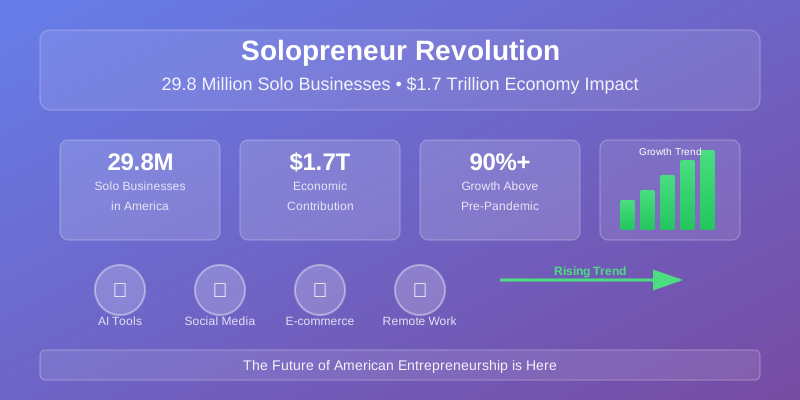
The solopreneur boom refers to the surge in independent entrepreneurs who run businesses single-handedly, often leveraging digital tools to handle everything from marketing to product development. According to recent data, over 50 million Americans are now involved in freelance or solo ventures, a 15% increase from 2025. This growth is driven by factors like remote work normalization, economic uncertainty pushing side hustles, and accessible tech stacks that reduce barriers to entry.
In 2026, the boom is particularly pronounced in sectors like e-commerce, content creation, and software services. Solopreneurs are no longer limited to niche gigs; they're building scalable empires, with many achieving six-figure revenues without hiring employees.
Enter Vibe Coding: The Game-Changer for Solopreneurs
One of the most exciting developments fueling this boom is vibe coding—a revolutionary AI-driven approach to software development that's democratizing tech creation. Coined by AI pioneer Andrej Karpathy, vibe coding allows anyone to build apps, websites, and automations by describing ideas in natural language, rather than writing traditional code.
Imagine telling an AI, "Create a simple e-commerce site with a minimalist vibe for handmade crafts," and watching it generate functional code in minutes. This isn't sci-fi; it's the reality of 2026, with tools like GitHub Copilot, Microsoft Power Apps, and emerging platforms enabling "no-code to pro-code" workflows. For solopreneurs, vibe coding eliminates the need for expensive developers, speeding up prototyping and iteration.
Key Vibe Coding Trends in 2026
As vibe coding matures, several trends are reshaping how solopreneurs operate. Here's a breakdown of the top dynamics based on the latest industry insights:
- AI-Augmented Prototyping: Vibe coding excels at overcoming the "blank page problem," where starting from scratch feels overwhelming. Solopreneurs can now prototype apps 3-5x faster, with 74% reporting productivity boosts in surveys. Tools like GitHub Spark allow voice-driven coding, turning casual ideas into working MVPs (Minimum Viable Products).
- Aesthetic and Personalized Development: Beyond functionality, vibe coding emphasizes "vibes"—curating immersive, creative environments. In 2026, trends include customized code editors with themes, live coding sessions synced to music, and emotionally intelligent AI that adapts to your mood or intent. This makes coding feel like art, ideal for creative solopreneurs in design or content fields.
- Multi-Agent Orchestration: Advanced vibe coding involves AI agents collaborating on tasks. For instance, one agent handles UI design while another optimizes backend logic. This is a boon for solo businesses, enabling complex projects without teams. Predictions for 2026 include voice-first sessions and personalized models trained on your business data.
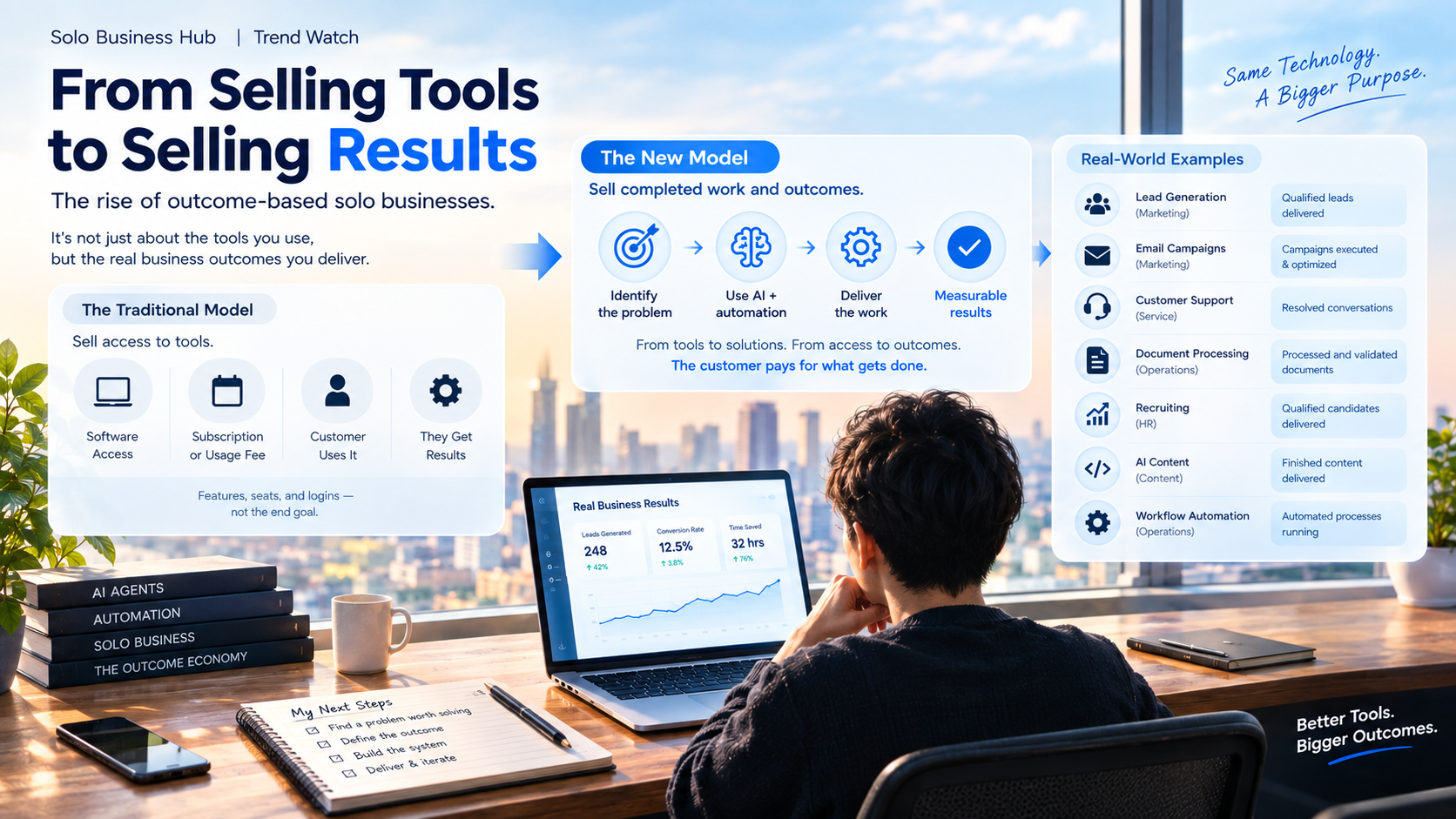
- Integration with Solo Business Tools: Vibe coding is seamlessly blending with platforms like Shopify, Notion, and Zapier. Solopreneurs can automate workflows—such as inventory management or customer chatbots—using natural language prompts, reducing manual work and scaling operations effortlessly.
- Ethical and Secure Coding Practices: As adoption grows (with searches up 6700% in recent months), concerns about code quality and security are rising. Trends include built-in fairness dashboards and retrieval-augmented generation to ensure AI outputs are reliable and bias-free. Solopreneurs must prioritize these to avoid pitfalls like insecure deployments.
These trends highlight vibe coding's role in making tech accessible, with 84% of developers using AI tools in 2026.
How Vibe Coding Powers the Solopreneur Boom in America
For American solopreneurs, vibe coding is a force multiplier. In a competitive market, it levels the playing field:
- Cost Savings: Skip hiring devs; build custom tools yourself for under $50/month via AI subscriptions.
- Speed to Market: Launch products faster, capitalizing on trends like AI-personalized e-commerce.
- Innovation Edge: Experiment freely, from vibe-coded apps for niche markets to automated marketing funnels.
- Work-Life Balance: Automate repetitive tasks, freeing time for creativity and growth.
Real-world examples abound: A solo marketer used vibe coding to create a custom CRM, boosting client retention by 40%. Another built a content platform that generates SEO-optimized articles on demand.
Challenges and Best Practices
While promising, vibe coding isn't without hurdles. Over-reliance on AI can lead to unmaintainable code, and ethical issues like bias must be addressed. Best practices include:
- Start small: Use prompts for simple tasks before scaling.
- Verify outputs: Always review AI-generated code for security.
- Combine with skills: Pair vibe coding with basic programming knowledge for better results.
- Stay updated: Follow communities on Reddit or X for the latest tools.
Looking Ahead: The Future of Solopreneurship in 2026
As the solopreneur boom evolves, vibe coding will be central to sustained success. With AI-native teams and multimodal models on the horizon, solo businesses could dominate industries like SaaS and digital services. America’s entrepreneurial spirit, combined with these tools, positions solopreneurs for unprecedented growth.
Frequently Asked Questions: Vibe Coding, AI Tools & the Solopreneur Boom
What is Vibe Coding?
Vibe Coding is an AI-powered development approach where founders describe product requirements in natural language and AI tools generate code, interfaces, and application logic automatically.
How does Vibe Coding help solopreneurs?
It reduces development time, cost, and technical barriers, enabling solopreneurs to launch MVPs and iterate without hiring a full engineering team.
Is Vibe Coding suitable for non-technical founders?
Yes. Many platforms are designed for non-technical users, allowing founders to build functional applications with minimal coding.
Can AI-generated code be used in production?
AI-generated code suits MVPs and early products; for production, review security, performance, and maintainability.
Popular Vibe Coding tools
Cursor, Replit, GitHub Copilot, Windsurf, v0 by Vercel, Lovable.
How is it different from traditional coding?
Traditional coding is manual; Vibe Coding lets founders describe outcomes and have AI generate and refactor code automatically.
Will Vibe Coding replace developers?
No. It enhances productivity and shifts focus toward system design, validation, and optimization.
What businesses benefit most?
Micro SaaS, automation tools, AI services, niche marketplaces, and creator platforms.
Are there risks?
Security issues, technical debt, and over-reliance on AI — human review remains important.
Why is it driving the solopreneur boom?
It lets a single founder build, launch, and scale rapidly, changing entrepreneurship economics in 2026.
Keywords: solopreneur boom America 2026, vibe coding trends, solo business innovation, AI for entrepreneurs, start solo business 2026